

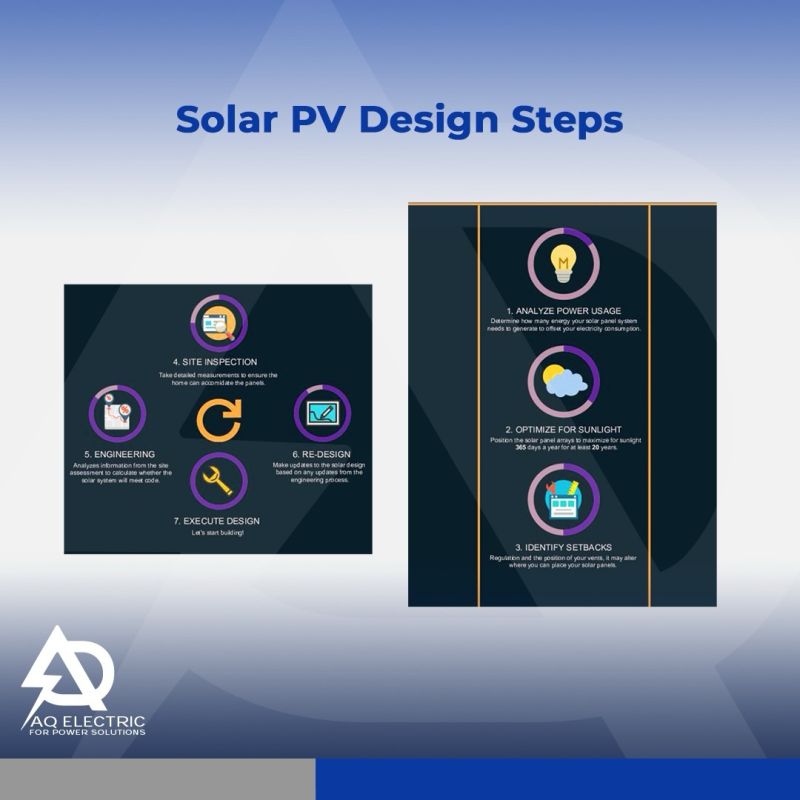
Switching to solar energy is a significant decision that requires careful planning and consideration. Designing a solar photovoltaic (PV) system involves several steps to ensure it meets your energy needs, fits your available space, and maximizes efficiency.
Here’s a comprehensive guide to help you through the process:
1. Determine Your Energy Consumption: Start by understanding how much electricity (kWh) you use and your current electricity rate.
2. Evaluate available Space: Measure the available space to ensure there’s enough area for the solar panels.
3. Assess Solar Radiation: Analyze your solar radiation data to estimate the potential energy generation.
4. Identify Shading Issues: Check for any shading obstacles that could affect the efficiency of your system.
5. Select the Right Solar Modules: Choose solar panels that best fit your energy needs and roof space.
6. Choose an Inverter: Pick an appropriate inverter to convert the generated DC power to usable AC power.
7. Select a Racking System: looking for a reliable racking system to securely mount your solar panels on the roof.
8. Explore Incentives and Savings: Research local and state incentives and calculate your potential cost savings.
9. Prepare Documentation: Ensure all necessary documents and permits are ready.
10. Install Your System: Finally, move forward with the installation and start enjoying solar energy!
Designing a solar PV system is a structured process that, when done correctly, can lead to significant energy savings and environmental benefits. By following these steps, you can ensure that your solar installation is optimized for performance and cost-effectiveness, paving the way for a sustainable and energy-efficient future.