

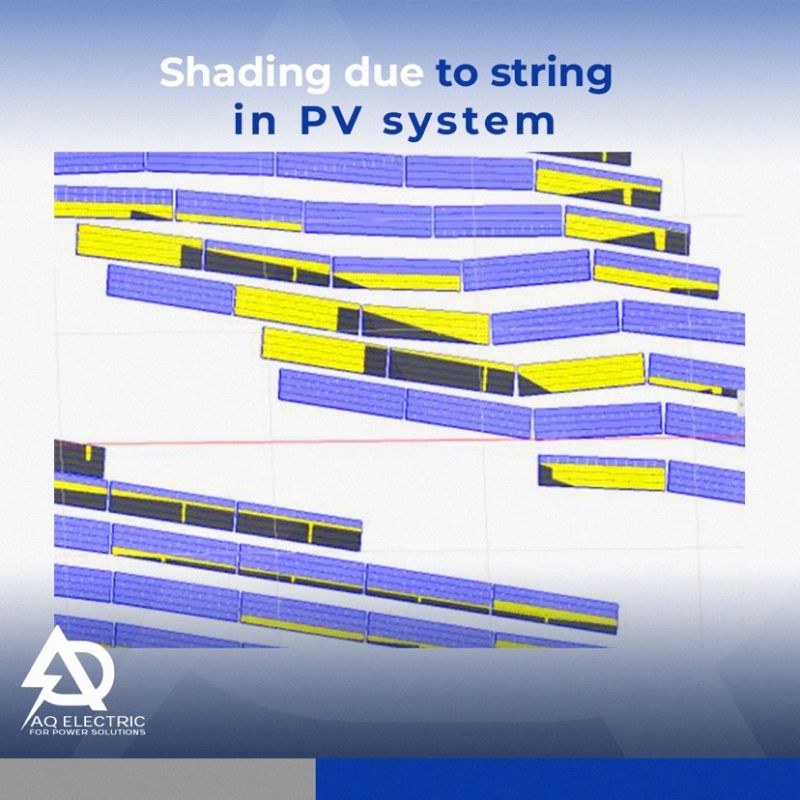
Shading poses a significant challenge for photovoltaic (PV) modules, as even shading a single cell within a module can result in a complete loss of power output.
The repercussions of shading extend beyond the shaded cell itself:
– String-wide Impact: Shading just one cell can diminish the output of the entire string of cells or modules.
– Excess Power Dissipation: Unshaded cells within the string dissipate excess power into the shaded cell.
– Bypass Diode Isolation: Bypass diodes play a crucial role by isolating the shaded cell, preventing it from further affecting the overall output.
Electrical losses, referred to as “shadings according to module strings,” are assessed to gauge the maximum electrical impact on array production. This evaluation offers a simplified yet approximate understanding, where the weakest cell dictates the current for the entire string. Consequently, when one cell is shaded, the entire string is affected, leading to a significant drop in efficiency.
“Electrical shadings” represent an additional loss during the conversion of irradiance into electrical power. This loss is attributed to mismatch losses arising from the inhomogeneity of irradiance.
The true impact of partial shadings on the electrical production of a PV field is non-linear and contingent on the interconnections between modules. Addressing this complexity is essential, and PVsyst provides a solution to account for these interconnections.
Understanding these nuances is crucial for effectively managing and optimizing the performance of PV systems in the presence of shading challenges.
For more information and requests you can reach us,,
– Email: Aqatawneh@aqelectric.net
– Mobile: +201151006630
+962795154126