

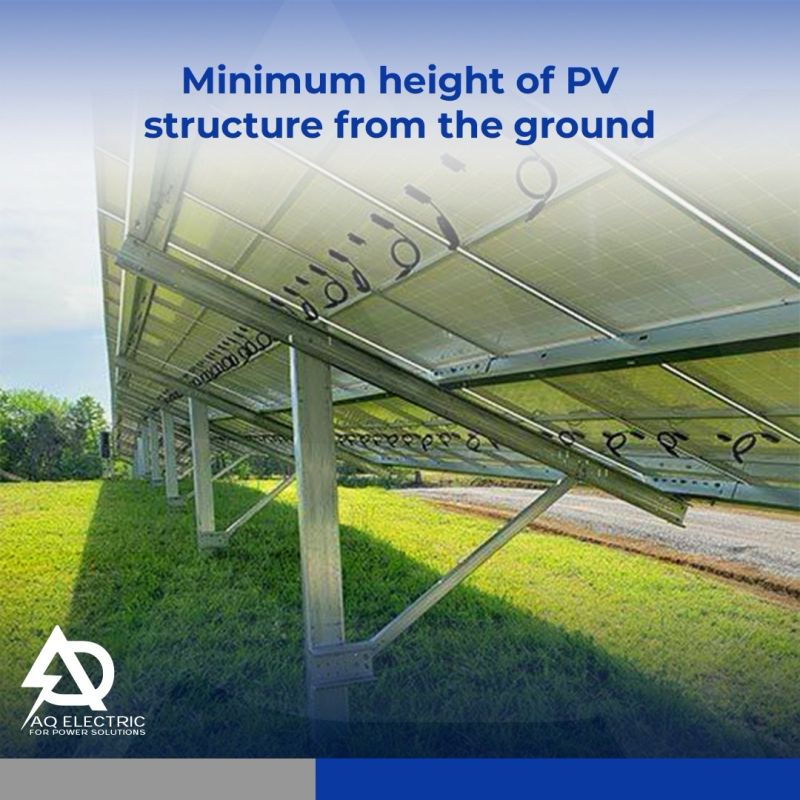
Ground-mounted PV systems are becoming more common as larger installations and solar investments grow in demand. With decreasing costs, these systems appeal even to customers without suitable rooftops. Unlike rooftop installations, ground-mounted systems can be built on a larger scale, offering greater financial returns and optimal alignment for improved efficiency.
What is Ground Clearance?
In the context of ground-mounted solar installations, ground clearance refers to the vertical distance between the lowest point of the solar panels and the ground.
Simply put, it’s how high your solar panels are off the ground. This measurement can vary depending on the design of the installation, the type of terrain, and other environmental factors.
Why is Ground Clearance Important
• Environmental Protection
• Animal Interference
• Decrease Vandalism
The Benefits of Ground Clearance
• Terrain versatility
• Enhanced Production
• Multi-Functional Space
• Environmental and Wildlife Protection
How Ground Clearance Affects Efficiency
• Reduced Shading Issues
• Cooler Operation
Advantages in Maintenance
• Easy Accessibility
• Ground Maintenance
Ground-mounted PV systems offer a range of advantages, especially when designed with appropriate ground clearance. Not only do they allow for larger-scale installations that provide greater financial returns, but they also offer the flexibility to optimize panel orientation and tilt, enhancing energy production. Proper ground clearance further contributes to the system’s overall efficiency and longevity by protecting against environmental and wildlife interference.
For more information and requests you can reach us,,
– Email: Aqatawneh@aqelectric.net
– Mobile: +201151006630
+962795154126