

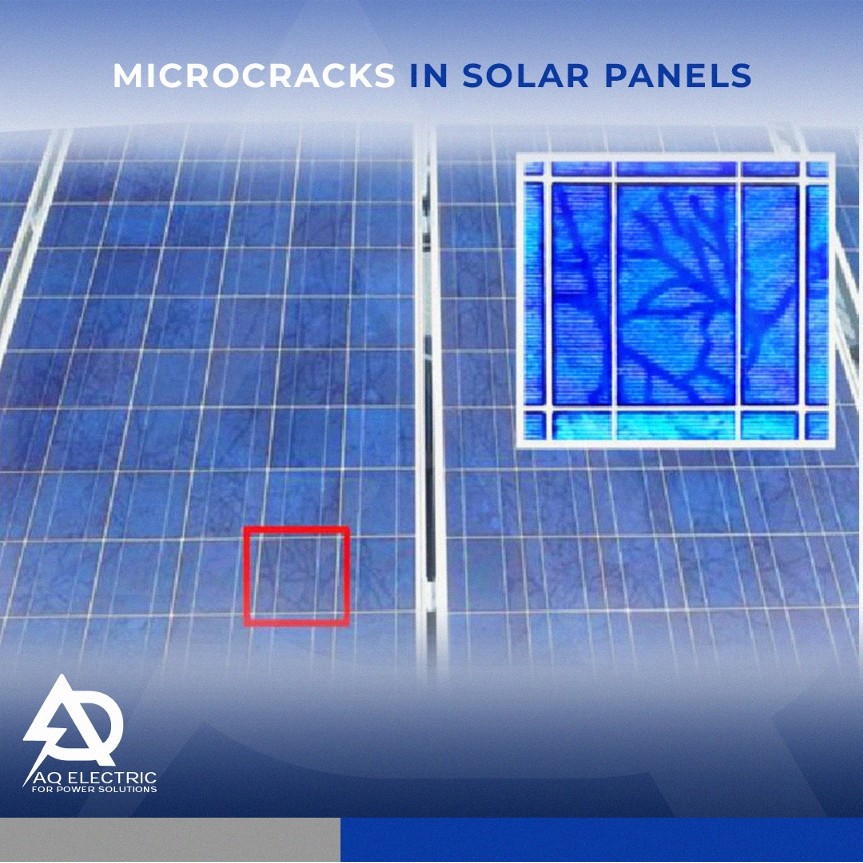
Micro-cracks, a form of solar cell degradation, significantly affect both energy output and the
lifespan of a solar photovoltaic (PV) system.
The thin silicon used in PV cells (around 180 +/- 20 microns) is vulnerable to damage, particularly if production and handling don’t meet required standards, even minor imperfections in PV cells can evolve into substantial micro-cracks within PV modules.
Causes of Micro-Cracks:
– Manufacturing Defects: Poor-quality raw – materials, process control issues, and mishandling during production contribute to defects.
– Supply Chain Stress: Mechanical stress during transportation and storage, arising from incorrect packaging, handling techniques, and transportation methods.
– Installation Stress: Improper module handling during installation, such as piling modules, dropping them, or carrying modules by one person instead of two, can cause stress.
– Environmental Conditions Post-Installation:
Micro-cracks can also result from:
* Thermal cycling
* Humidity and freezing
* Cyclic pressure loads and wind loads
* Heavy snowfall
* Hail
Prevention and Detection:
Manufacturers play a crucial role in preventing micro-cracks by adhering to meticulous manufacturing and assembly practices.
Quality tests, including electroluminescence (EL) testing, are performed before and after lamination to identify micro-cracks.
EL testing, using image analysis and measurement, allows for direct inspection of solar cells to locate potential defects.
This method is essential for revealing hidden faults not detected by other testing methods, ensuring that only the highest-quality solar panels are shipped.
In summary, understanding the causes, preventing stress during manufacturing, transportation, and installation, and employing rigorous testing methods like EL testing are paramount in addressing the challenges posed
by micro-cracks in solar PV systems.
For more information and requests you can reach us,,
– Email: Aqatawneh@aqelectric.net
– Mobile: +201151006630
+962795154126