

Have you chosen the right installation method for your PV modules?
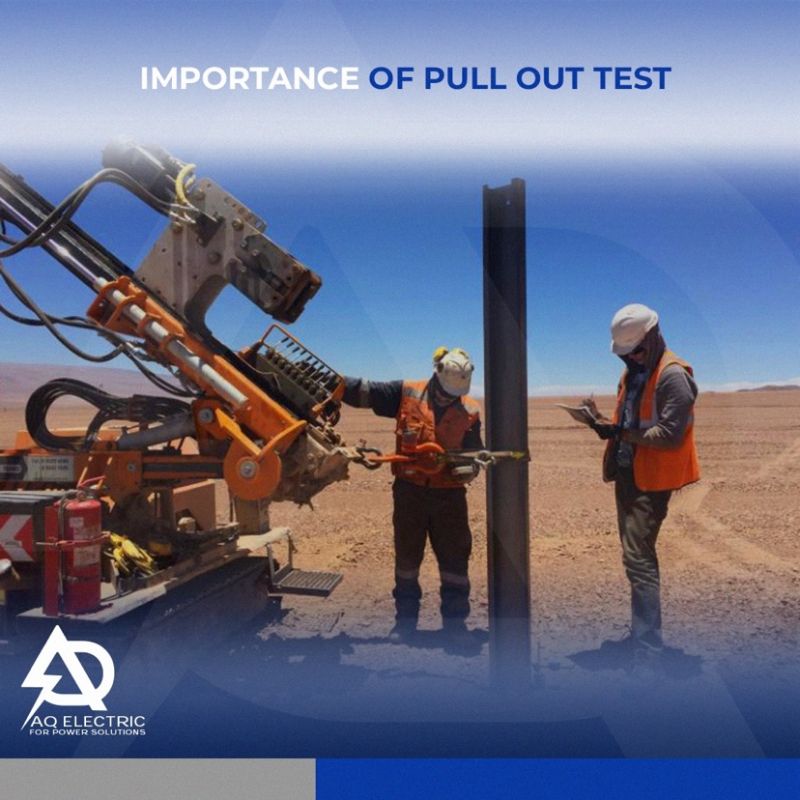
In the process of developing and constructing solar energy projects, it’s crucial to conduct geotechnical studies, including ramming and load tests (Pull Out Test) for specific profile types you plan to use. These tests assess a profile’s ability to withstand wind loads at predetermined driving depths and deformation tolerances. Typically, two or three driving depths are tested for at least two profile types to validate design loads.
The procedure involves these key steps:
1- Identifying test locations within the PV array.
2- Ensuring the proper installation and security of anchoring components, such as ground screws or anchors.
3- Applying controlled upward force using a hydraulic jack or winch.
4- Measuring force and displacement with load cells.
5- Recording continuous force-displacement data.
6- Evaluating the results to determine load capacity, pull-out strength, and compliance with PV system requirements.
By diligently conducting geotechnical studies and Pull Out Tests during the i stallation and development of solar energy projects, we ensure the structural integrity and stability of our PV systems.
These tests help us verify that our chosen profiles can withstand wind loads and deformation within the specified tolerances
For more information and requests you can reach us,,
– Email: Aqatawneh@aqelectric.net
– Mobile: +201151006630
+962795154126