

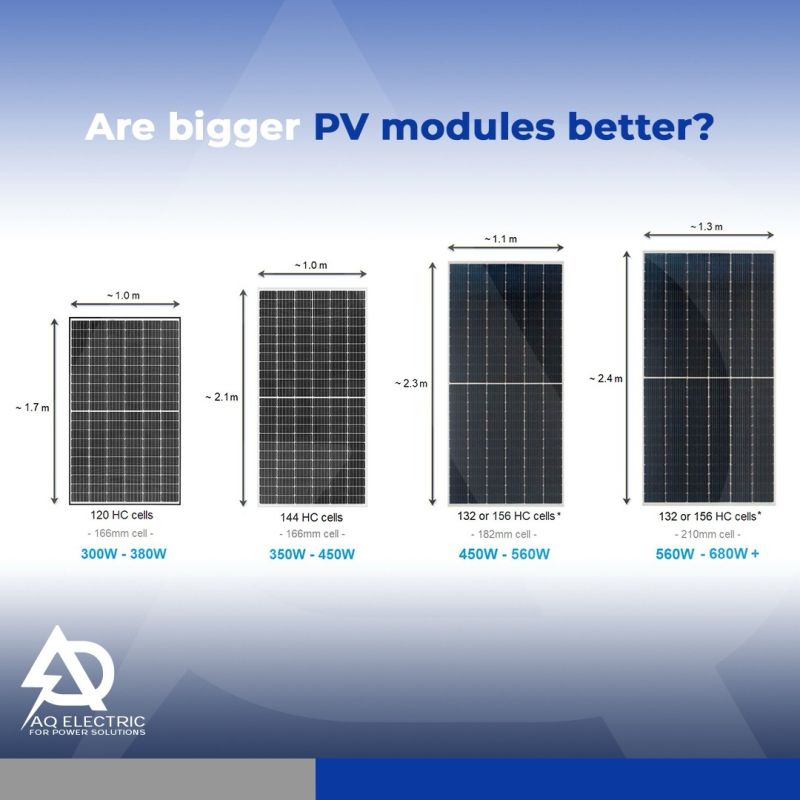
For Tier-1 PV manufacturers, larger formats offer clear benefits. By adapting equipment, they can produce 600 W modules as quickly as 400 W ones, effectively increasing production capacity. This shift could widen the gap between larger producers and smaller ones unable to keep up.
While these high-power ratings are impressive, they often stem from size increases rather than groundbreaking innovations. The introduction of half-cut cells enabled this shift, with further improvements in interconnection strategies and reduced cell gaps contributing to increased active surface area.
For manufacturers heavily invested in PERC technology, larger formats offer a way to boost energy yield and lower LCOE at the project level, providing value comparable to other innovations.
Manufacturers claim that larger modules not only optimize their costs but also reduce system design expenses, leading to lower LCOE at the project level. One key promise is that more powerful modules will reduce costs for trackers and racking systems. With proper orientation, racking only needs minor adjustments to accommodate more modules, thereby maximizing watts per pile.
However, concerns have arisen over the increased size. Thinner front glass makes some modules more fragile, though manufacturers have addressed this with reinforced metal frames. Higher currents from lower voltage modules also raise the risk of hotspots, though design innovations aim to mitigate this. Additionally, the size and weight of these modules pose challenges in shipping and installation, although manufacturers have optimized packaging and installation methods to manage these issues.
As the industry continues to evolve, both 182 mm and 210 mm wafer sizes are here to stay. Analysts predict that these two formats will dominate the market by 2025, with 210 mm gradually gaining ground as it establishes itself. While larger modules offer significant benefits, their adoption will depend on the ability of manufacturers and project developers to navigate the associated risks and challenges.
In the short term, the 182 mm format appears to be the safer, more reliable option, while the 210 mm format represents a bold step into new territory. The future success of these larger modules will hinge on their ability to deliver on their promises while maintaining cost-effectiveness and reliability.
For more information and requests you can reach us,,
– Email: Aqatawneh@aqelectric.net
– Mobile: +201151006630
+962795154126