

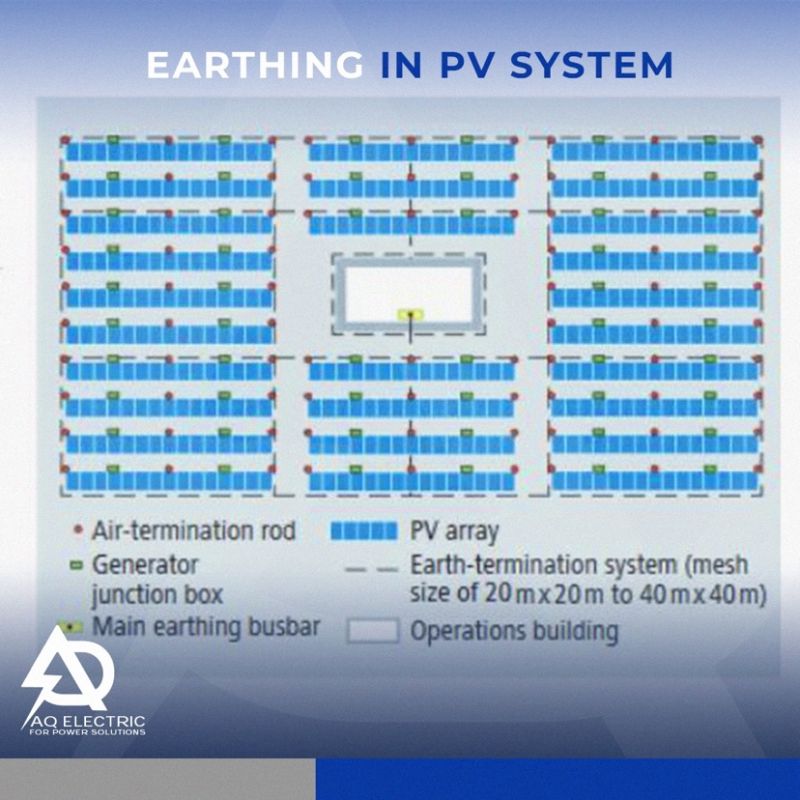
Establishing a robust connection between your solar panels and the earth is a crucial step in safeguarding both people and equipment from potential electrical hazards. Commonly known as earthing or grounding, this process plays a pivotal role in dissipating electrical energy, protecting against shocks, and serving as a reliable reference point for electrical measurements.
Proper earthing of a PV system is essential to mitigate the risk of damage caused by electrical surges, lightning strikes, and other disturbances. Inadequate earthing can compromise the efficiency of solar panels, leading to premature failures and necessitating costly repairs or replacements.
For an effective earthing setup in your PV system, consider the following components:
– Earth Cable: Utilize copper strips, which offer low resistance, to connect all metallic parts of the PV system. Ensure that the cross-sectional area of the earth wire is well sized according to codes and standards.
– Earthing clamp: Opt for conductors that securely fix the earthing connection to the earth. Keep the lead of the ground minimal in size, straight, and with a minimal number of clamps.
– Earth Plate: Concealed underground, this component—be it a pipe, plate, or metallic rod—links to the earthing clamp. Choose materials like copper rod with extremely low resistance to safely carry fault current to the ground.
Investing in a comprehensive earthing system not only ensures the longevity and performance of your solar farm but also contributes to a safer and more efficient energy infrastructure.
For more information and requests you can reach us,,
– Email: Aqatawneh@aqelectric.net
– Mobile: +201151006630
+962795154126