

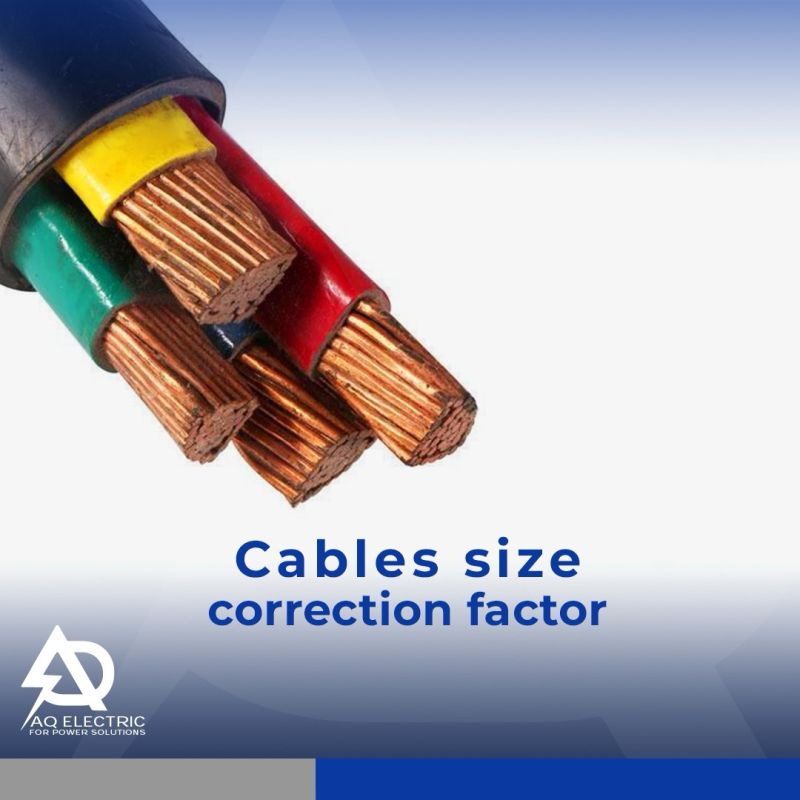
The selection of the correct cross-sectional area for cables is one of the most crucial decisions in the design of electrical installations. This choice significantly affects:
* The selection of overcurrent protective devices.
* The voltage drop across the conductors.
* The calculation of prospective short-circuit currents.
Cables are rated for current-carrying capacity based on how well they can dissipate heat generated internally during current flow. However, external factors can also influence their performance, and these must be accounted for using correction factors.
Here are key considerations:
1. Ambient Temperature
Standard installation conditions assume a reference temperature . If cables are installed in environments exceeding this temperature, a correction factor must be applied to ensure the correct cable cross-sectional area is selected.
2. Thermal Insulation
If a cable passes through thermal insulation at any point, its ability to dissipate heat is reduced. This requires a correction factor to avoid overheating and ensure reliable operation.
3. Cable Grouping
When multiple cables are installed in close proximity, they can interfere with each other’s ability to release heat. A grouping correction factor accounts for this mutual heating effect and ensures that the cables can carry the necessary current without risk of failure.
Another factors affect the size of the cable like depth of buired, thermal resistivity and type of the cable, will be detailed in another post.
considering these correction factors ensures the safe and efficient operation of electrical installations.
For more information and requests you can reach us,,
– Email: Aqatawneh@aqelectric.net
– Mobile: +201151006630
+962795154126