

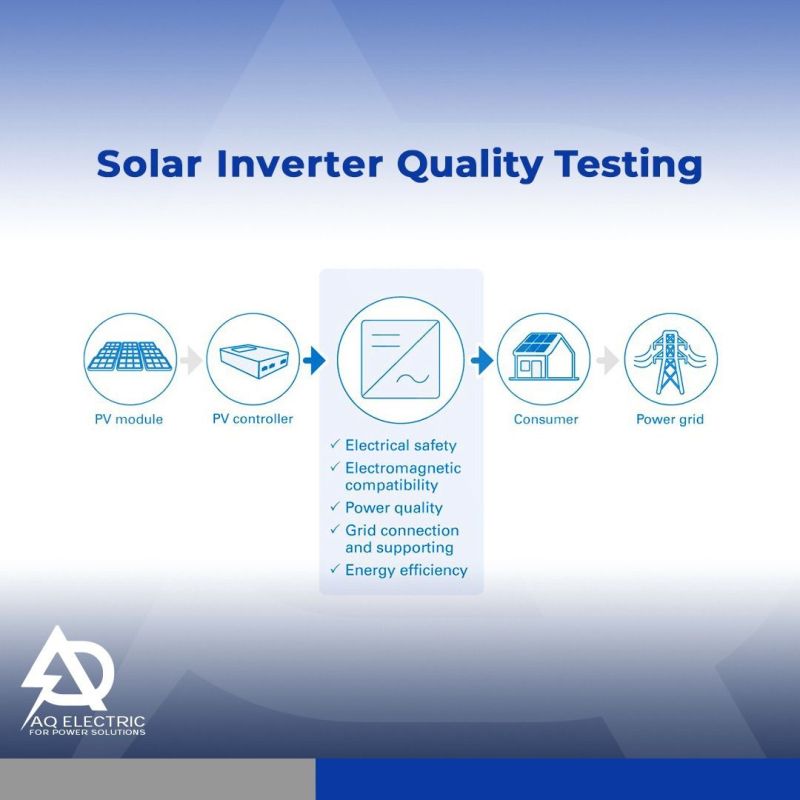
Solar inverters are the operational heart and most defect-sensitive part of every solar PV system, inverters are required to handle high, varying voltages, consistently face extreme temperature ranges and are exposed to environmental stress.
Therefore, solar PV inverters and/ or its single components may fail for a range of reasons.
These reasons start from low component quality and its quick degradation during ongoing performance, frequent electrical transients from the panels or grid, current/ voltage stress, frequent vibrations, usage beyond operating limits, component contaminationetc.
Basic solar inverter quality testing on-site at a factory includes a range of steps and tests. Usually, (quality) manufacturers of solar inverters will carry out meticulous testing of each of their inverters before packing and ship them.
Among the many testing steps and procedures, there are four major tests that an inverter needs to undergo before being packed and shipped:
– Ingress protection (IP) testing
The ingress protection (IP) rating of an inverter defines the ability of the inverter casing and seal to prevent moisture, dust ingress and foreign particles from entering and harming the electrical components.
– Built quality check
This basically involves an assessment of the qualityand assembly of the components on the electrical circuit board (resistors, diodes, capacitors, transistors etc.) and wiring used in the system.
– Hot spots and temperature distribution
During this test procedure, the temperature inside an inverter and its distribution is checked. Inverters are therefore run for at least 60 minutes and then tested on the temperature conditions using thermal cameras.
– Functions test
The functions test is a standard inverter test conducted before an inverter leaves the factory. The functions test assesses the operational functioningand power conversion characteristics of the particular inverter with a simulated pv array.
Ensuring the quality of PV inverters is vital for the overall performance and longevity of solar power systems. By conducting thorough quality tests, including inspections for electrical safety, thermal performance, and functional reliability, you can identify and address potential issues before deployment. This proactive approach not only safeguards the investment in solar technology but also enhances the efficiency and durability of the entire system.
For more information and requests you can reach us,,
– Email: Aqatawneh@aqelectric.net
– Mobile: +201151006630
+962795154126