

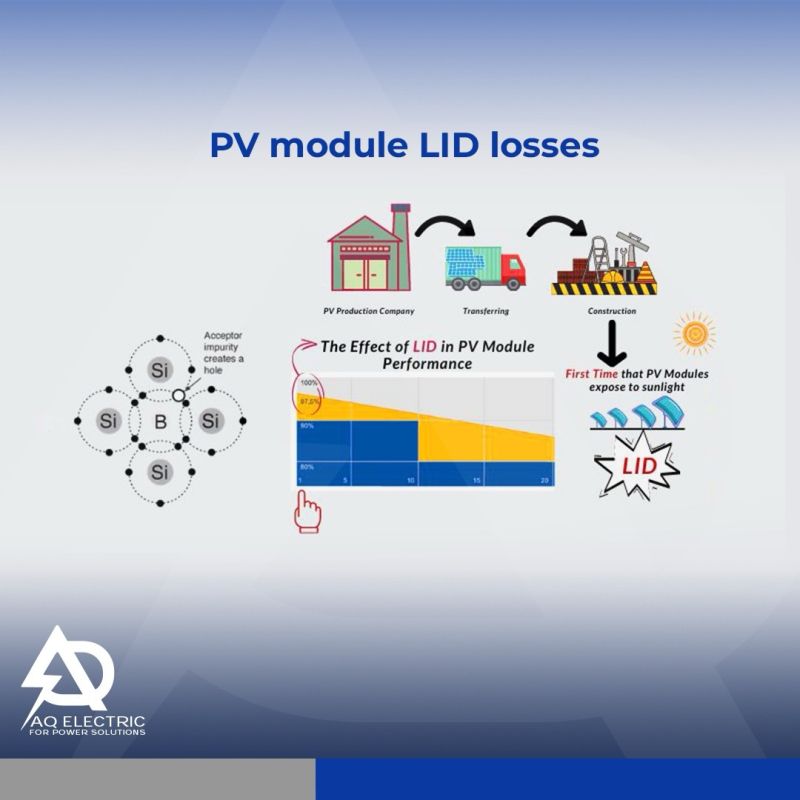
What is Light Induced Degradation (LID)?
Light Induced Degradation (LID) refers to the loss of performance in PV modules that occurs within the first few hours of sun exposure. This degradation primarily impacts the actual performance of installed modules compared to the nameplate data provided by some PV module manufacturers.
LID results from direct light exposure, causing a decline in performance and quality during the initial hours of panel setup. For instance, when sunlight directly hits the panel electronics, even a small amount of heat can cause them to warp, buckle, or break down. This early degradation affects the factory flash-on test data provided by some PV panel manufacturers.
Why is Light Induced Degradation (LID) testing for solar modules important?
LID is a well-known issue for silicon solar cell manufacturers and can significantly reduce generated power. Testing for LID is crucial to ensure the long-term efficiency of PV modules. Estimating LID is essential for accurate simulations of yield and cost-effectiveness in PV systems.
When is Light Induced Degradation (LID) testing performed?
LID testing is conducted early in the manufacturing process by testing the solar cells. This testing is vital for ensuring reliability and quality control during module production. Various setups, often simulating field conditions, are suitable for LID testing. These setups use advanced LED techniques and electrical carrier injection. Both methods—light or electrical current injection—produce the same degradation effect.
For more information and requests you can reach us,,
– Email: Aqatawneh@aqelectric.net
– Mobile: +201151006630
+962795154126