
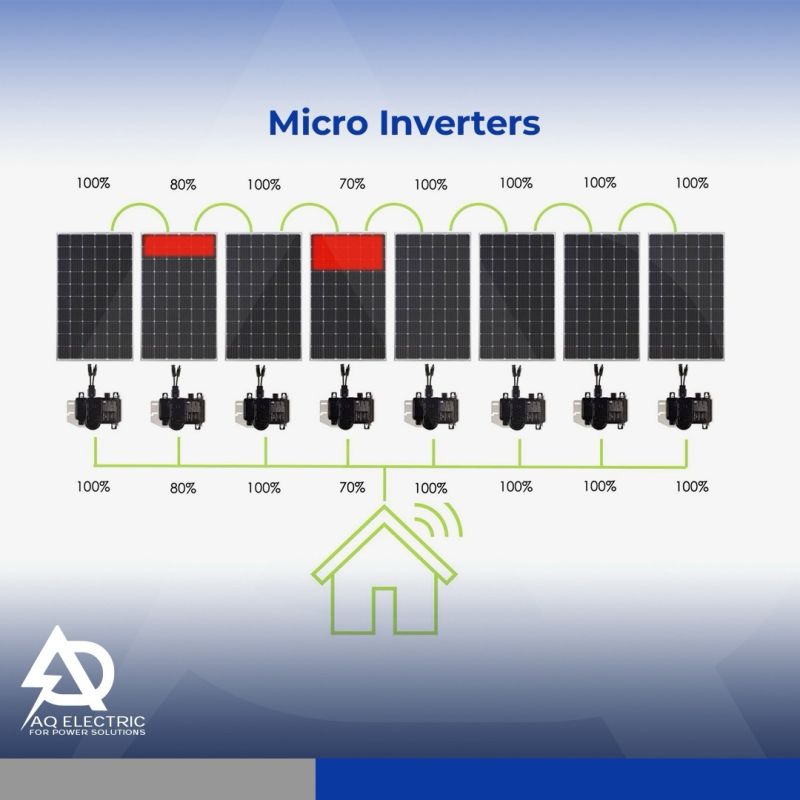
Microinverters convert electricity from your solar panels into usable power, but unlike centralized string inverters, which handle an entire system, microinverters are installed at each panel, this classification as module-level power electronics (MLPE) means each microinverter operates independently, offering advantages for installations with shading or complex layouts.
With microinverters, each panel has its own inverter, ensuring efficient performance even if one panel underperforms, they offer flexible solutions but may not suit everyone’s needs.
Pros and Cons of Microinverters:
Advantages:
* Rapid shutdown capability
* Flexibility in panel layout and expansion
* Panel-level monitoring, optimization, and diagnostics
* No single point of failure
* Longer warranty
Disadvantages
* Higher price
* More difficult maintenance
* Lower power output than panel rating
Microinverters are ideal for roofs with multiple planes, varying angles, or shading throughout the day. They come in various sizes to match different panel outputs, ensuring optimal performance and minimizing energy loss.
Microinverters enable independent panel electricity production, and some models can support multiple panels, reducing the overall number needed and lowering costs.
Microinverters provide significant benefits for solar panel installations, particularly in complex or shaded environments. Their flexibility, safety features, and reliability make them a valuable option despite the higher initial cost and maintenance complexity.
Assessing your specific installation needs will help determine if microinverters are the best choice for your solar energy system.
For more information and requests you can reach us,,
– Email: Aqatawneh@aqelectric.net
– Mobile: +201151006630
+962795154126