

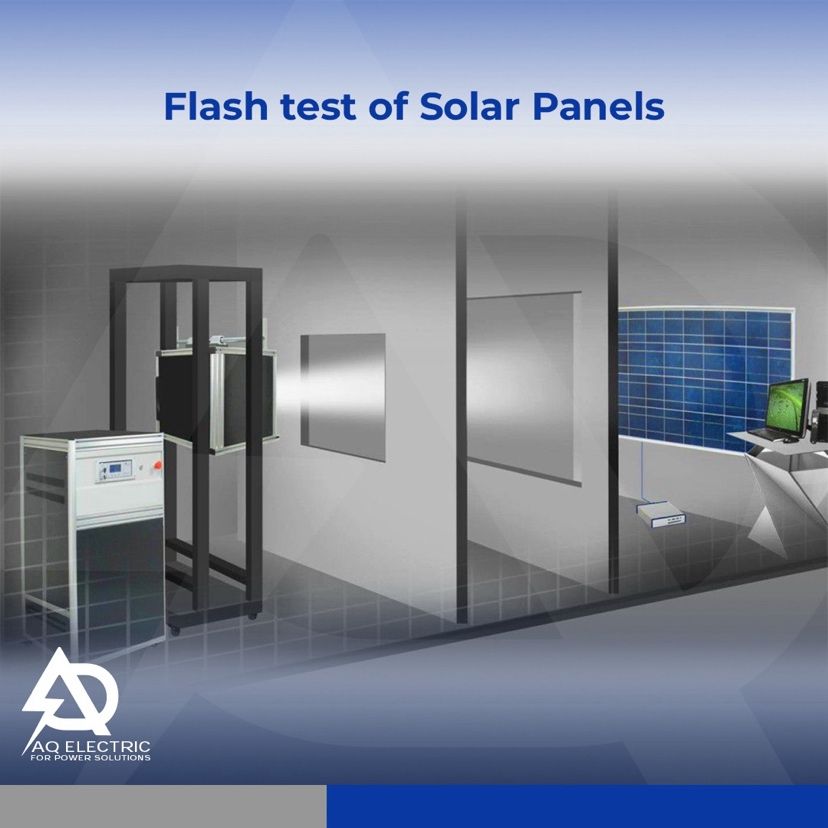
A flash test for solar panels is a diagnostic procedure, used to determine the performance of photovoltaic (PV) panels under high current and voltage conditions.
The test involves applying a high-intensity flash of light to the solar panel and measuring the response in terms of voltage and current.
This information is used to determine the efficiency and health of the panel, identify performance issues, and ensure that the panel is functioning within its specified operating range.
A flash test typically requires the following equipment:
1. Solar light simulator
2. Data acquisition system:
3. Flash generator
4. Test leads
5. Panel mounting equipment
6. Light meter
A flash test can tell you the following information about a solar panel:
1. Open-circuit voltage
2. Short-circuit current
3. Maximum power point
4. Panel efficiency
In a flash test, a reference module is known. This is a high-quality solar panel and is used as a benchmark for comparison with the solar panel being tested. The reference module has been calibrated and its performance characteristics, such as its open-circuit voltage, short-circuit current, and maximum power point is well – known.
Reference modules are generally calibrated at a high-tech, third party laboratory that ensures precise, detailed measurements of the modules characteristics.
For more information and requests you can reach us,,
– Email: Aqatawneh@aqelectric.net
– Mobile: +201151006630
+962795154126