

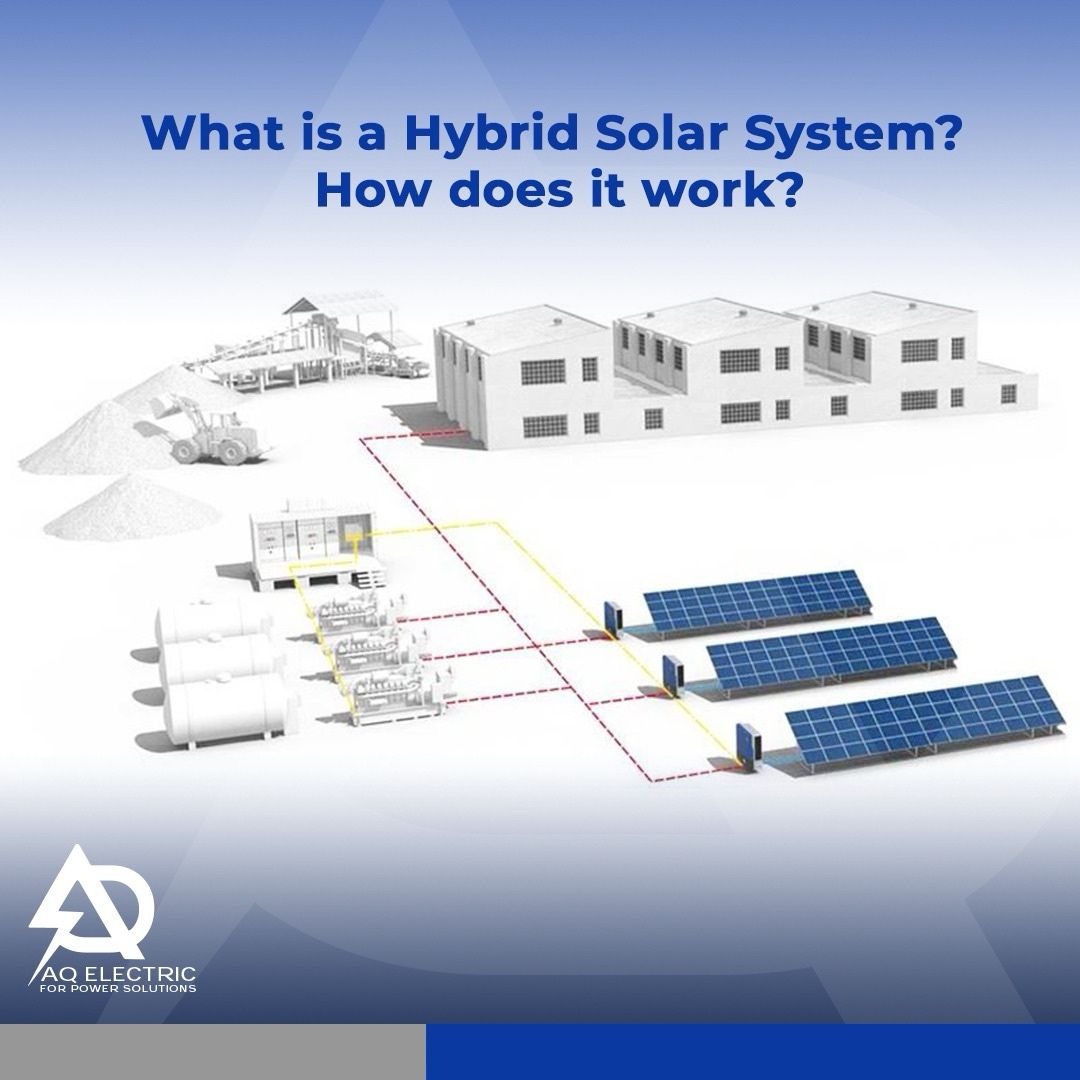
Hybrid solar systems offer a blend of independence from off-grid systems and the reliability of grid-tied setups, providing efficient, user-friendly energy management for owners.
How Does a Hybrid Solar System Work?
A hybrid solar system combines photovoltaic (PV) panels with energy storage technology. Solar panels convert sunlight into electricity for your property. Any excess energy flows either into the grid or a battery bank for storage, available for later use.
Key Components of a Hybrid Solar System:
• Battery Bank: Solar batteries, store unused energy for future use.
• Hybrid Inverter: Converts direct current (DC) from the solar cells to alternating current (AC), manages power distribution between solar panels and the battery, and connects to the grid.
• Metering/Monitoring System
• Solar Panels
Hybrid systems combine on-grid and off-grid capabilities, ensuring continuous power by switching seamlessly between solar, battery, and grid power as needed. This setup provides reliable power during grid outages or low sunlight conditions. Hybrid systems also reduce reliance on the grid, allowing stored power use during peak times or emergencies.
Benefits of a Hybrid Solar System:
• Cost Savings: Reduces electricity bills and offsets peak-hour grid charges.
•Flexibility: Provides power backup and storage options.
•Sustainability: Reduces dependence on fossil-fuel-powered grid electricity.
Disadvantages of a Hybrid Solar System:
• Compatibility Concerns: Current hybrid converters may not work with newer battery technologies, limiting future upgrades.
•Complex Installation: Hybrid systems have more components, making installation more complicated and potentially costlier.
• High Up-Front Cost: The initial investment can be substantial. Hybrid inverters are pricier than traditional ones, and batteries can add significantly to installation costs.
Installation Process for a Hybrid Solar System:
1. Calculate Power Usage: Determine your property’s energy needs.
2. Choose a Suitable Installation Site: Select a secure and clean area for installation.
3. Review Safety Guidelines: Follow manufacturer instructions to ensure safe operation and equipment longevity.
4. Set Up Batteries and Inverters: Install these components before mounting the solar panels.
5. Connect Components: Link solar panels to batteries, inverters, and the monitoring system.
As the world shifts towards renewable energy, hybrid solar systems stand out by offering dual benefits: generating solar power and storing excess energy for later. They provide continuous power and are ideal for residential, commercial, and utility applications.
For more information and requests you can reach us,,
– Email: Aqatawneh@aqelectric.net
– Mobile: +201151006630
+962795154126