

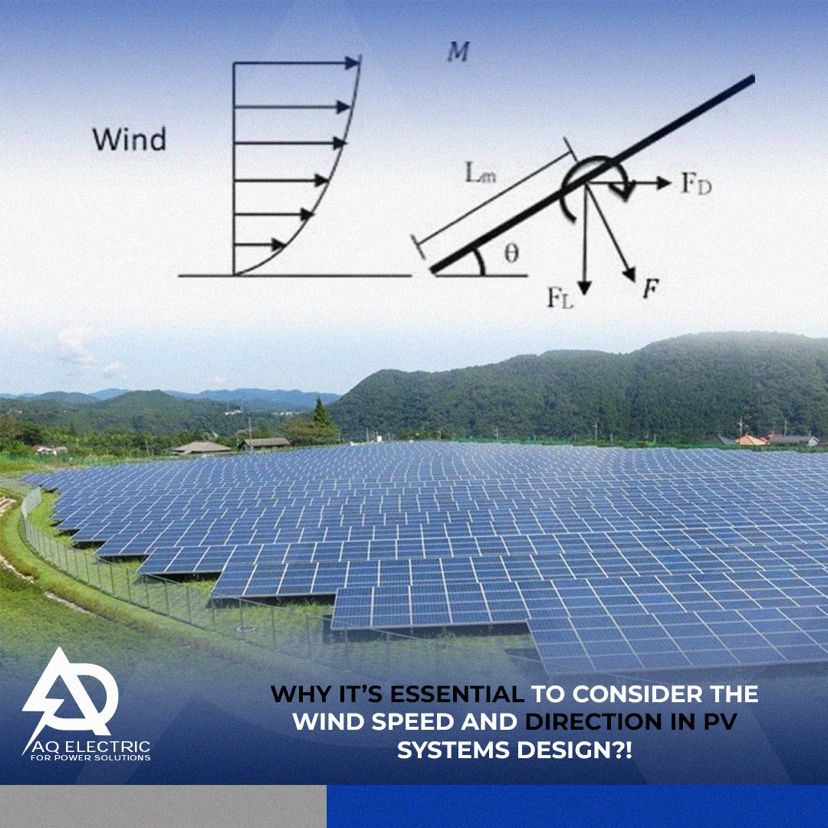
Is important to consider the Wind load when designing PV systems?!
Wind load is an important consideration in the design and installation of photovoltaic (PV) systems, Wind load refers to the force exerted by wind on the components of a PV system, including solar panels, mounting structures, and other associated equipment. Properly accounting for wind load is crucial to ensure the structural integrity and longevity of the PV system, as well as the safety of people and property in the vicinity.
Several factors contribute to the wind load experienced by a PV system:
Wind Speed: The primary factor influencing wind load is the speed of the wind. Wind speed varies depending on geographical location, site elevation, and local climate conditions. Engineers use wind speed data from local weather stations or codes and standards to determine the design wind speed for the specific installation location.
1- Exposure Category: The exposure category describes the surroundings of the installation site and how they influence the wind’s force on the structure. For instance, a PV system located in an open field will experience higher wind loads compared to one located in a built-up urban area with surrounding buildings.
2- Height and Elevation: The height at which the PV system is installed above ground level plays a significant role in wind load calculations. Taller structures experience higher wind speeds and thus greater wind loads.
Additionally, the elevation of the site can impact wind load, as higher elevation areas may experience stronger winds.
3- Shape and Size of Components: The shape, size, and orientation of the PV components (such as solar panels and mounting structures) influence the wind load. Components with larger surface areas perpendicular to the wind direction will experience greater wind forces.
4- Mounting and Support Structures: The design and integrity of the mounting and support structures for the solar panels are critical in withstanding wind loads. Properly engineered mounting systems ensure that the panels remain securely attached to the supporting structure even during strong winds.
It’s worth noting that wind load isn’t the only consideration in PV system design. Other factors such as snow load, seismic load, electrical considerations, and local regulations must also be taken into account to ensure the overall safety, efficiency, and compliance of the system.
For more information and requests you can reach us,,
Email: Aqatawneh@aqelectric.net
Mobile: +201151006630
+962795154126