

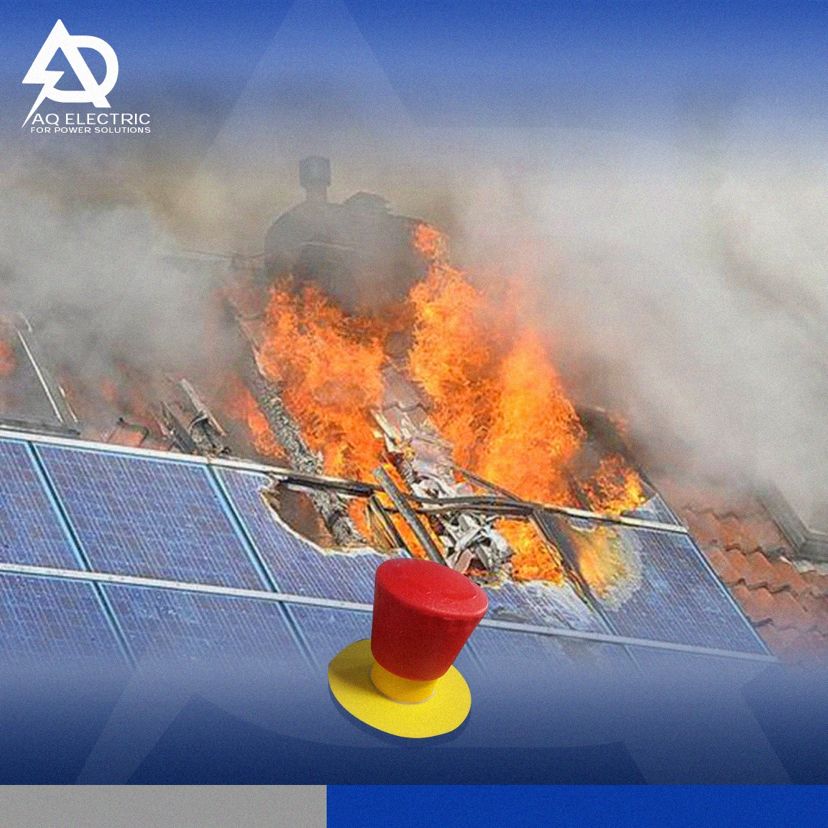
How do Emergency shutdown devices contribute to enhancing the safety of photovoltaic (PV) systems during faults?
Emergency shutdown systems function by identifying critical conditions within a system and then triggering activation to mitigate potential leaks, explosions, or other significant malfunctions.
In PV plants, emergency shutdowns can be accomplished at the inverter level, permitting access to inverters or the inverter pad only when safe conditions are ensured and no noticeable safety hazards exist at the equipment.
However, some inverters lack an emergency push button. In such cases, a switch disconnector should be attached to or placed near the inverters. When dealing with these situations, refrain from opening switches labeled “do not disconnect under load” until the load break switch disconnector has been opened and the current flow halted. It is safer to operate the AC switch or breaker before the DC switch disconnector, Do you know why ?!
At the PV module and string level, isolation should not be attempted during emergency situations until initial measures have been taken to shut off power or interrupt fault current flow via the inverter and isolating switch. This is because PV connectors are non-load break devices, and thus, current checks should always be conducted first before opening the connectors.
For more information and requests you can reach us,,
Email: Aqatawneh@aqelectric.net
Mobile: +201151006630
+962795154126